> For the complete documentation index, see [llms.txt](https://docs.candelacharts.com/llms.txt). Markdown versions of documentation pages are available by appending `.md` to page URLs; this page is available as [Markdown](https://docs.candelacharts.com/models/fractal-range-model-tm/smt.md).
# SMT
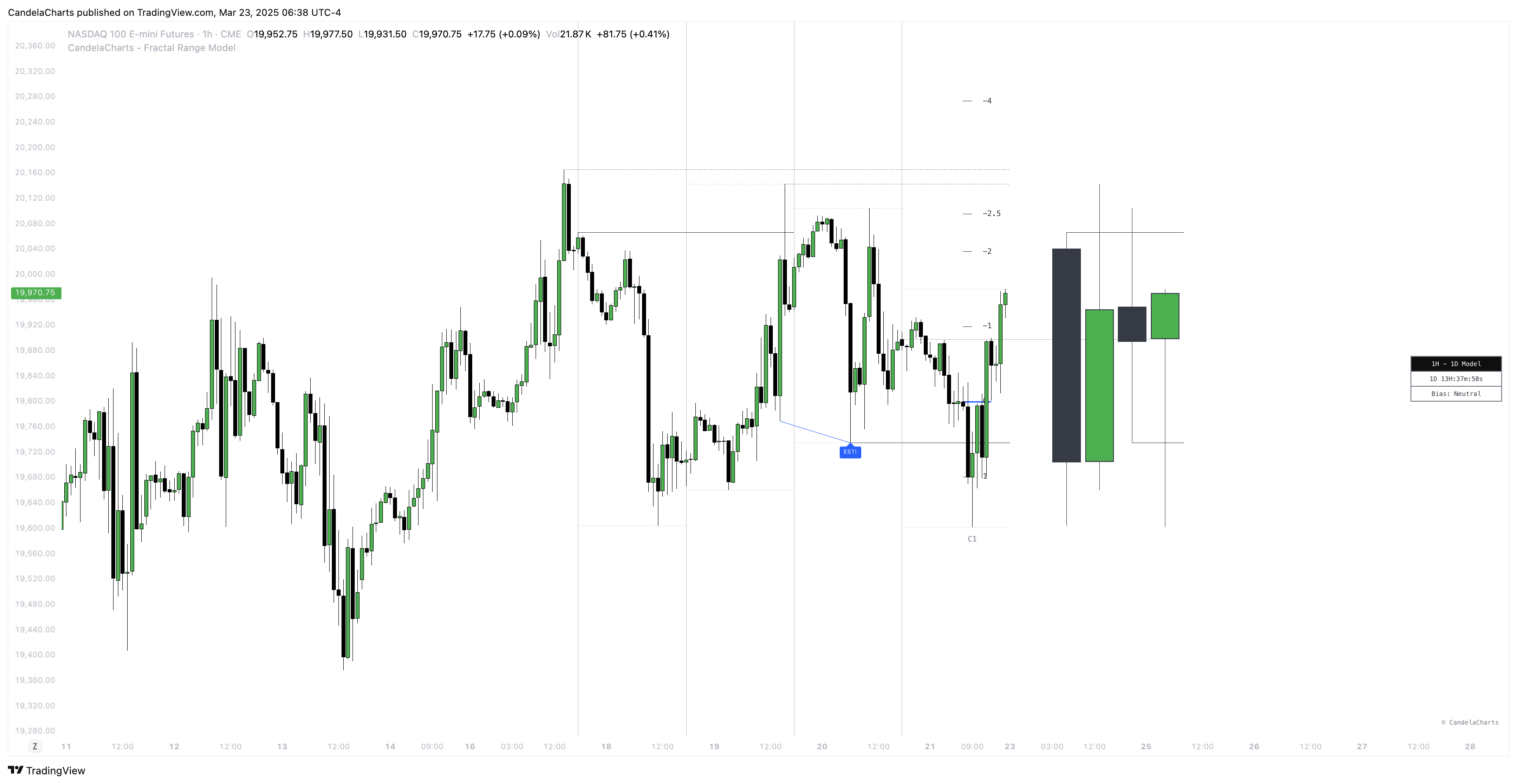
Fractal Range Model SMT
In the context of the **Fractal Range Model (FRM)**, the **SMT (Smart Money Technique)** serves as a crucial **confluence indicator** that strengthens the reliability of a formed model.
When an SMT signal aligns with a model, it signifies a high level of confidence in the direction of the market, indicating a strong and likely sustained trend.
The **SMT** acts as a confirmation tool that validates the directional bias provided by the Fractal Range Model. It helps identify the involvement of **smart money** — the institutional and sophisticated market participants whose actions often drive significant market moves.
When the SMT signal aligns with a specific model, such as a **Sweep** or **CISD** formation, it confirms the likelihood that the market will follow through in the indicated direction.
This confluence between the **Fractal Range Model** and **SMT** offers traders a more reliable and robust framework for predicting price action, providing clarity on which way the market is most likely to move.
With the added confirmation from SMT, traders can confidently enter positions with a stronger conviction in the direction of the trend.
In summary, the **SMT** within the Fractal Range Model is a critical confluence factor that strengthens the directional signals of the model.
When an SMT signal aligns with a formed market model, it confirms a clear market bias, indicating a strong probability of price movement in that direction.
By leveraging this confluence, traders can make more informed, high-confidence decisions in their market entries and exits.
---
# Agent Instructions
This documentation is published with GitBook. GitBook is the documentation platform designed so that both humans and AI agents can read, navigate, and reason over technical content effectively. Learn more at gitbook.com.
## Querying This Documentation
If you need additional information that is not directly available in this page, you can query the documentation dynamically by asking a question.
Perform an HTTP GET request on the current page URL with the `ask` query parameter, and the optional `goal` query parameter:
```
GET https://docs.candelacharts.com/models/fractal-range-model-tm/smt.md?ask=&goal=
```
`ask` is the immediate question: it should be specific, self-contained, and written in natural language.
`goal` is optional and describes the broader end goal you are ultimately trying to accomplish on behalf of the user. GitBook uses it to tailor the answer towards what is most useful for that goal.
The response will contain a direct answer to the question and relevant excerpts and sources from the documentation.
Use this mechanism when the answer is not explicitly present in the current page, you need clarification or additional context, or you want to retrieve related documentation sections.