> For the complete documentation index, see [llms.txt](https://docs.candelacharts.com/llms.txt). Markdown versions of documentation pages are available by appending `.md` to page URLs; this page is available as [Markdown](https://docs.candelacharts.com/models/sfp-model/trend-channel.md).
# Trend Channel
### Visualizing the Drift
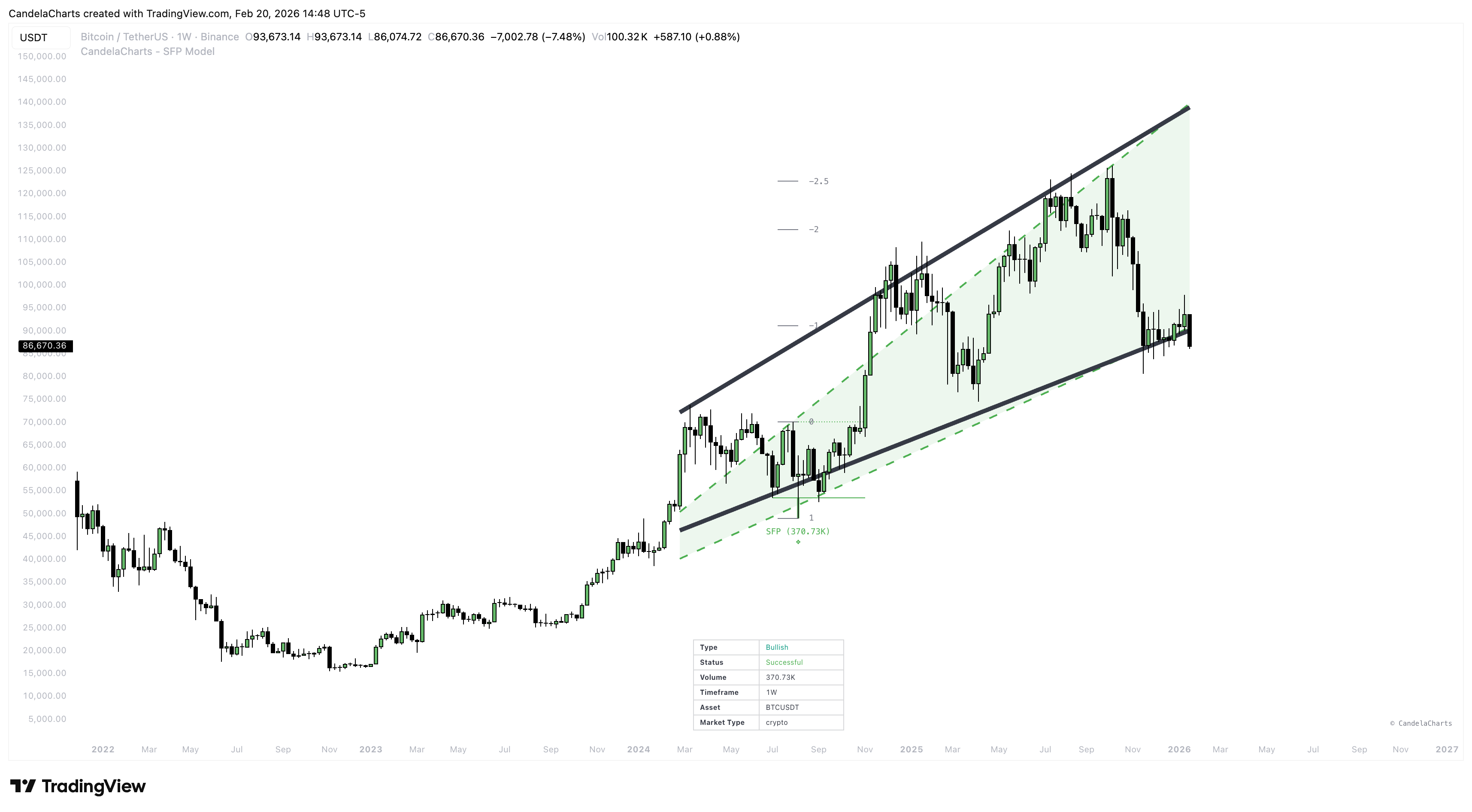
The **Trend Channel** tool helps you instantly visualize the market's "flow." Whether the market is trending cleanly or drifting chaotically, these channels provide the boundaries you need to identify overbought (Premium) and oversold (Discount) conditions relative to the trend.
### Channel Types
We offer two distinct methods for calculating the channel, each with its own advantages:
#### 1. Trendline (Pivot-Based)
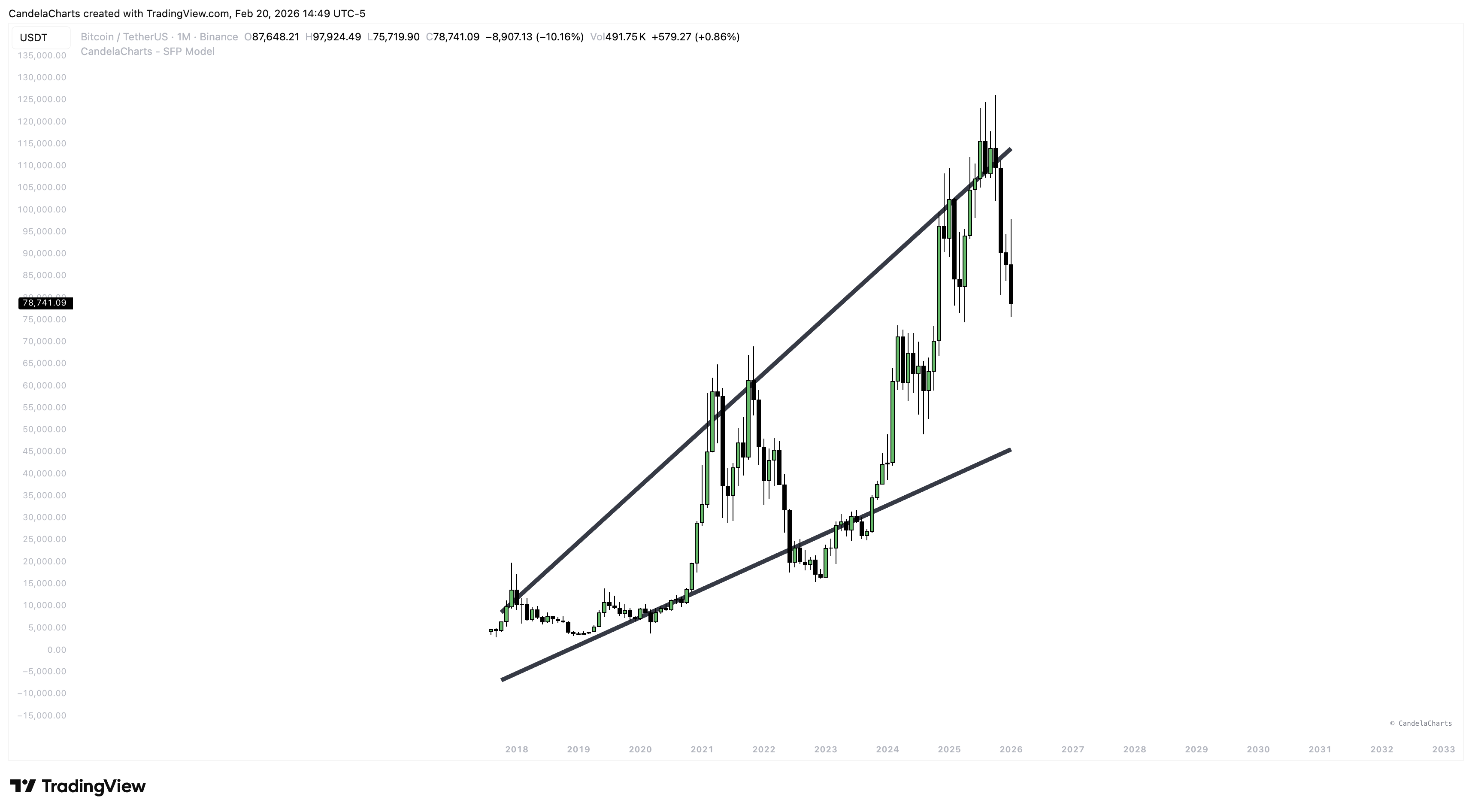
* **Logic**: This method finds the most recent Pivot Highs and Pivot Lows and draws dynamic trendlines to connect them.
* **Best For**: Traders who prefer "organic" channels that adapt to Market Structure break points.
* **Visual**: Creates a shape that expands and contracts based on volatility.
{% hint style="info" %}
This method connects your most recent swing highs and swing lows to draw two lines that outline the current trend. As new swings form, the lines update automatically to reflect the latest price structure.
* The **upper line** acts as a moving resistance — when price approaches it, sellers tend to step in.
* The **lower line** acts as a moving support — when price reaches it, buyers often show interest.
* A clean **break beyond either line** can signal a shift in trend or a momentum breakout.
Think of it as the market's short-term "guardrails" — they show you where price has been bouncing and where it might bounce again.
{% endhint %}
#### 2. Channel (Linear Regression)
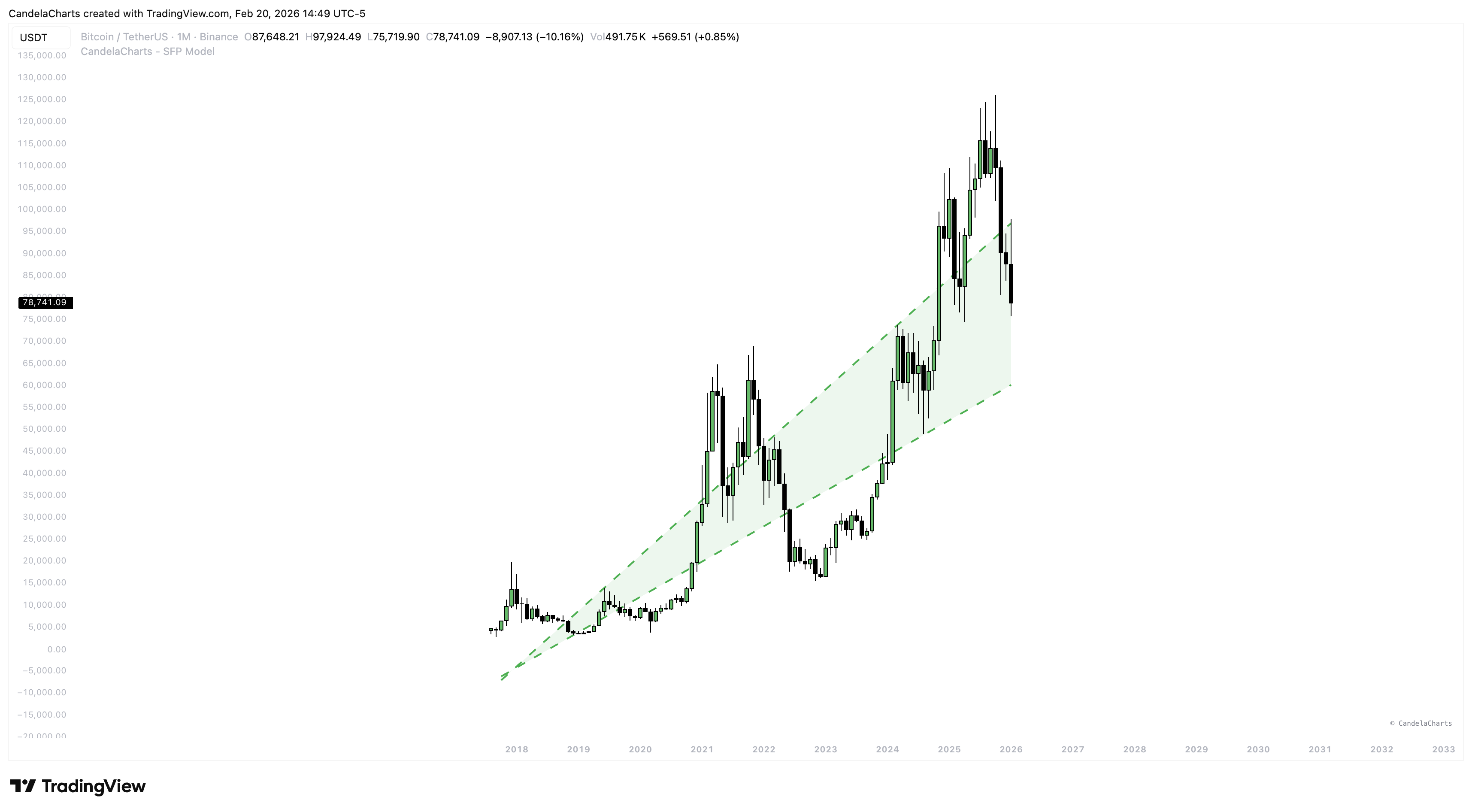
* **Logic**: Uses a 5-point linear regression algorithm to mathematically fit a channel around the price action.
* **Best For**: Identifying the statistical "mean" of the trend and its standard deviations.
* **Visual**: Creates a smooth, parallel channel that clearly shows the directional bias.
{% hint style="info" %}
This method takes a broader, more statistically balanced view. Instead of reacting to every swing, it divides a lookback window into five equal segments, picks the most extreme highs and lows in each, and fits a straight channel through them.
The result is a smoother, wider channel that captures the overall trend direction without getting distracted by short-term noise.
* **Channel angled up** → the trend is bullish. **Angled down** → bearish.
* Price near the **upper boundary** suggests the market is stretched — potential area to take profits or look for reversals.
* Price near the **lower boundary** suggests the market may be undervalued relative to the trend — potential area for entries.
{% endhint %}
### Using both together
Each method tells you something different. The **Trendline** reacts quickly to recent swings — it's your short-term pulse on where support and resistance are forming right now. The **Channel** takes a step back and looks at the bigger picture — it smooths out the noise and shows you the overall direction and where price sits relative to fair value. On their own, each is useful. But when you combine them, you get a much clearer read on the market. Agreement between the two is where the best opportunities tend to show up.
Here are more practical interpretations:
#### Trend Continuation
If the Channel is angled upward and price pulls back to the **mean line**, then bounces — that's a classic trend continuation signal. The market dipped to fair value and buyers stepped back in. The same applies in reverse for downtrends: a rally up to the mean line that gets rejected tells you sellers are still in charge.
#### Breakout Confirmation
When price breaks above the **Trendline's upper boundary** and the **Channel** is also angled upward, it's a sign of genuine strength — momentum and structure are aligned. But if price breaks the Trendline while the Channel is flat or pointing the other way, be cautious — it could be a false breakout or just a temporary spike.
#### Exhaustion & Reversal
If price reaches the **upper Channel boundary** while the **Trendline** is flattening out or starting to curl, the trend may be losing steam. When the Channel says "overbought" and the Trendline says "momentum is fading," that's a warning sign — consider tightening stops or looking for reversal entries.
#### Mean Line as a Decision Zone
The **mean line** is a great "gut check." If you're in a long trade and price drops below the mean line, it's a signal that the trade is losing its edge — the market is no longer trading at a premium within the channel. Conversely, if you're looking to enter a trade, waiting for price to return to the mean line often gives you a better entry than chasing price near the boundaries.
#### Channel Squeeze
When the **Channel narrows** — the upper and lower boundaries are getting closer together — it means the market is compressing. This usually precedes a big move. You don't know which direction yet, but it's a heads-up to pay attention. Once price breaks out of a tight channel with conviction, the move tends to be explosive.
#### Divergence Between Methods
When the **Trendline** is pointing up but the **Channel** is pointing down (or vice versa), it tells you the market is in a transitional phase. Short-term momentum and longer-term structure disagree. These are tricky environments — it's usually best to wait for both to realign before committing to a direction.
---
# Agent Instructions
This documentation is published with GitBook. GitBook is the documentation platform designed so that both humans and AI agents can read, navigate, and reason over technical content effectively. Learn more at gitbook.com.
## Querying This Documentation
If you need additional information that is not directly available in this page, you can query the documentation dynamically by asking a question.
Perform an HTTP GET request on the current page URL with the `ask` query parameter, and the optional `goal` query parameter:
```
GET https://docs.candelacharts.com/models/sfp-model/trend-channel.md?ask=&goal=
```
`ask` is the immediate question: it should be specific, self-contained, and written in natural language.
`goal` is optional and describes the broader end goal you are ultimately trying to accomplish on behalf of the user. GitBook uses it to tailor the answer towards what is most useful for that goal.
The response will contain a direct answer to the question and relevant excerpts and sources from the documentation.
Use this mechanism when the answer is not explicitly present in the current page, you need clarification or additional context, or you want to retrieve related documentation sections.