> For the complete documentation index, see [llms.txt](https://docs.candelacharts.com/llms.txt). Markdown versions of documentation pages are available by appending `.md` to page URLs; this page is available as [Markdown](https://docs.candelacharts.com/models/turtle-soup-model-tm/dashboard.md).
# Dashboard
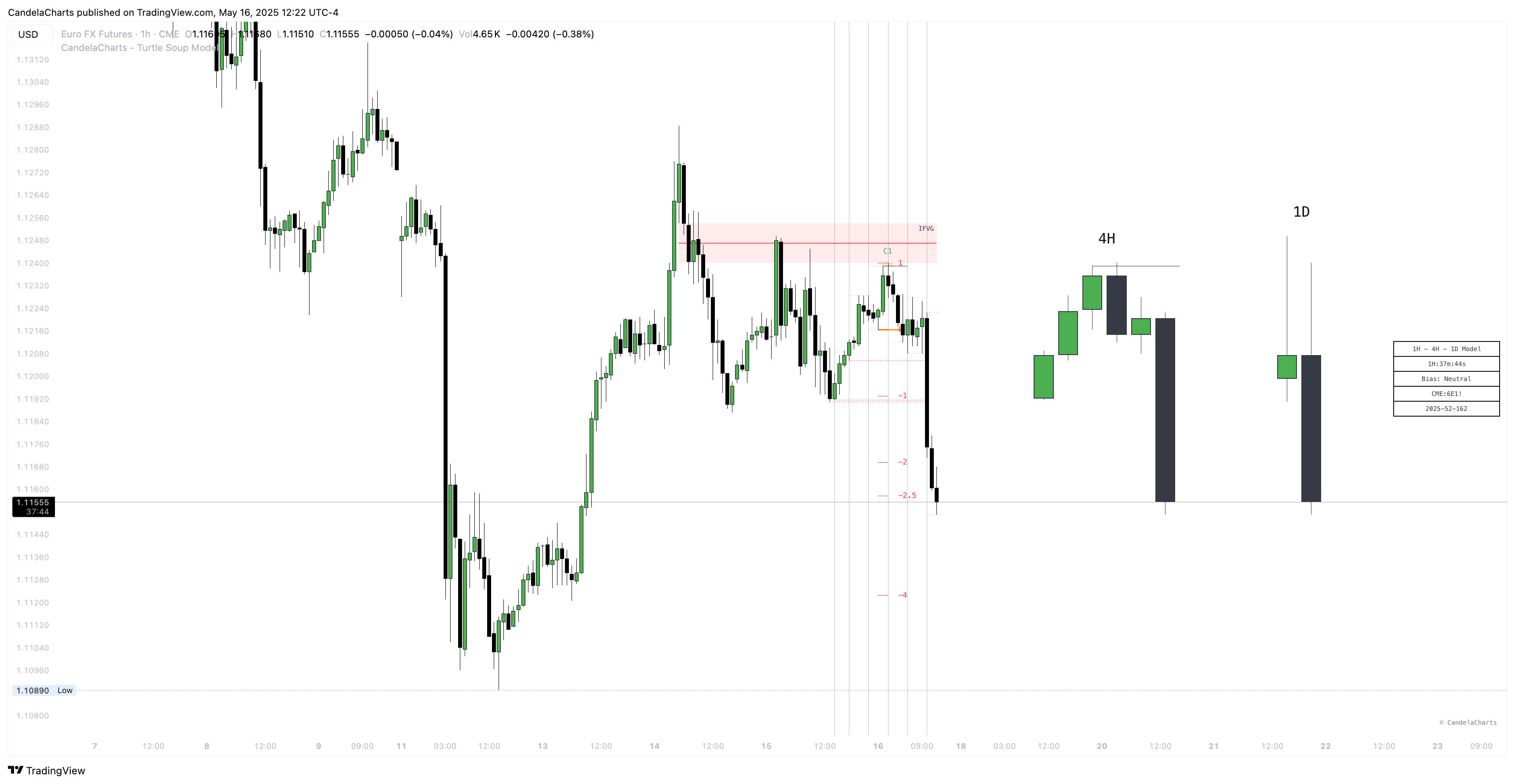
Turtle Soup Model Dashboard
The Turtle Soup Model Dashboard provides traders with essential, real-time information to support decision-making and enhance market analysis.
Designed to present key data points, the dashboard offers a comprehensive overview of current market conditions and the chart’s state, allowing traders to make informed and timely decisions.
### **Bias**
This section indicates the overall market bias based on the current model and timeframe. It helps traders quickly assess whether the market is trending bullish, bearish, or neutral, offering a clear directional view. Understanding the market bias enables traders to align their strategy with prevailing market conditions.
### **Current Model**
The dashboard highlights the current model identified by the Turtle Soup Model, such as a Sweep or Market Structure Shift (MSS). This feature lets traders instantly know which market structure is active, helping them understand the underlying market dynamics and identify potential opportunities for trade.
### **Remaining Time Until HTF Candle Close**
This section displays a countdown showing the time remaining until the higher timeframe (HTF) candle closes. It provides traders with valuable insights into how much time is left for the current candle to complete, assisting with the timing of entries, exits, or model validations. This feature is especially useful for traders focused on higher timeframes who need to make decisions based on the closure of key candles.
### **Sessions Filter**
This filter allows users to view trading data within specific market sessions (Killzones), helping traders focus on the most relevant data for their trading hours.
### **Model Status Filter**
This filter enables users to focus on specific states or conditions of the Turtle Soup Model, streamlining the analysis of key trading patterns and ensuring the dashboard highlights only the most pertinent information.
### **Asset and Date**
This section provides details on the asset currently being analyzed and the date of the chart. It ensures that traders are working with up-to-date market information, relevant to their analysis and trade planning.
The Turtle Soup Model Dashboard consolidates critical information, including market bias, the current model, and the remaining time until the HTF candle closes. By presenting these data points in a clear, streamlined format, traders can make more informed decisions and better navigate market conditions with confidence and precision. The added filters and time-sensitive features further enhance the dashboard's utility, ensuring that traders are equipped to act quickly and effectively in a dynamic market environment.
---
# Agent Instructions
This documentation is published with GitBook. GitBook is the documentation platform designed so that both humans and AI agents can read, navigate, and reason over technical content effectively. Learn more at gitbook.com.
## Querying This Documentation
If you need additional information that is not directly available in this page, you can query the documentation dynamically by asking a question.
Perform an HTTP GET request on the current page URL with the `ask` query parameter, and the optional `goal` query parameter:
```
GET https://docs.candelacharts.com/models/turtle-soup-model-tm/dashboard.md?ask=&goal=
```
`ask` is the immediate question: it should be specific, self-contained, and written in natural language.
`goal` is optional and describes the broader end goal you are ultimately trying to accomplish on behalf of the user. GitBook uses it to tailor the answer towards what is most useful for that goal.
The response will contain a direct answer to the question and relevant excerpts and sources from the documentation.
Use this mechanism when the answer is not explicitly present in the current page, you need clarification or additional context, or you want to retrieve related documentation sections.