> For the complete documentation index, see [llms.txt](https://docs.candelacharts.com/llms.txt). Markdown versions of documentation pages are available by appending `.md` to page URLs; this page is available as [Markdown](https://docs.candelacharts.com/oscillators/oscillator-concepts-tm/divergences.md).
# Divergences
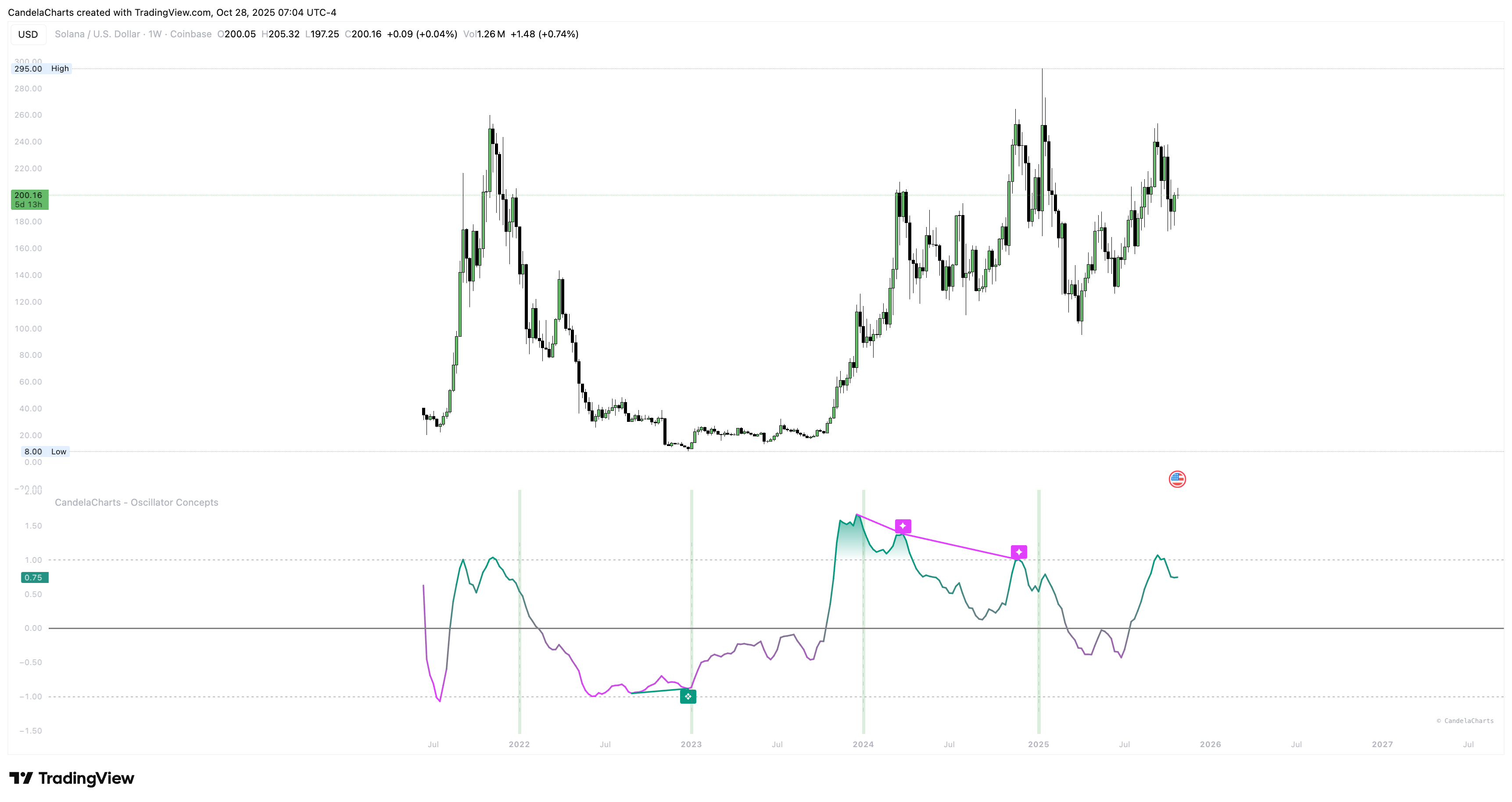
A divergence is a polite refusal. Price prints a new extreme, but The Line doesn’t back it up. That can hint at exhaustion, absorption, or stealth accumulation/distribution.
### **Quality over quantity**
A stricter mode focuses on divergences built at meaningful distance from the band and filters casual mid‑range wiggles. The goal is fewer but clearer opportunities.
### **How to act**
* **Build a case:** divergence + fading participation + softening stripe.
* **Time it:** use a **re‑entry** toward the band, a failure test at structure, or a simple “stop‑going” bar for trigger.
* **Risk:** place invalidation beyond the extreme that formed the divergence and scale out into nearby structure.
### **Expectations**
Not every divergence leads to a full reversal. Many simply resolve into a pause or a two‑leg pullback. Trade the *first turn*, then reassess.
### **Visibility**
Marks and traces are compact—easy to review, unobtrusive live. If you want a clean pane, show only confirmed marks.
---
# Agent Instructions
This documentation is published with GitBook. GitBook is the documentation platform designed so that both humans and AI agents can read, navigate, and reason over technical content effectively. Learn more at gitbook.com.
## Querying This Documentation
If you need additional information that is not directly available in this page, you can query the documentation dynamically by asking a question.
Perform an HTTP GET request on the current page URL with the `ask` query parameter, and the optional `goal` query parameter:
```
GET https://docs.candelacharts.com/oscillators/oscillator-concepts-tm/divergences.md?ask=&goal=
```
`ask` is the immediate question: it should be specific, self-contained, and written in natural language.
`goal` is optional and describes the broader end goal you are ultimately trying to accomplish on behalf of the user. GitBook uses it to tailor the answer towards what is most useful for that goal.
The response will contain a direct answer to the question and relevant excerpts and sources from the documentation.
Use this mechanism when the answer is not explicitly present in the current page, you need clarification or additional context, or you want to retrieve related documentation sections.