> For the complete documentation index, see [llms.txt](https://docs.candelacharts.com/llms.txt). Markdown versions of documentation pages are available by appending `.md` to page URLs; this page is available as [Markdown](https://docs.candelacharts.com/statistics/ohlc-range-map-tm/statistical-levels.md).
# Statistical Levels
OHLC Range Map Statistical Levels
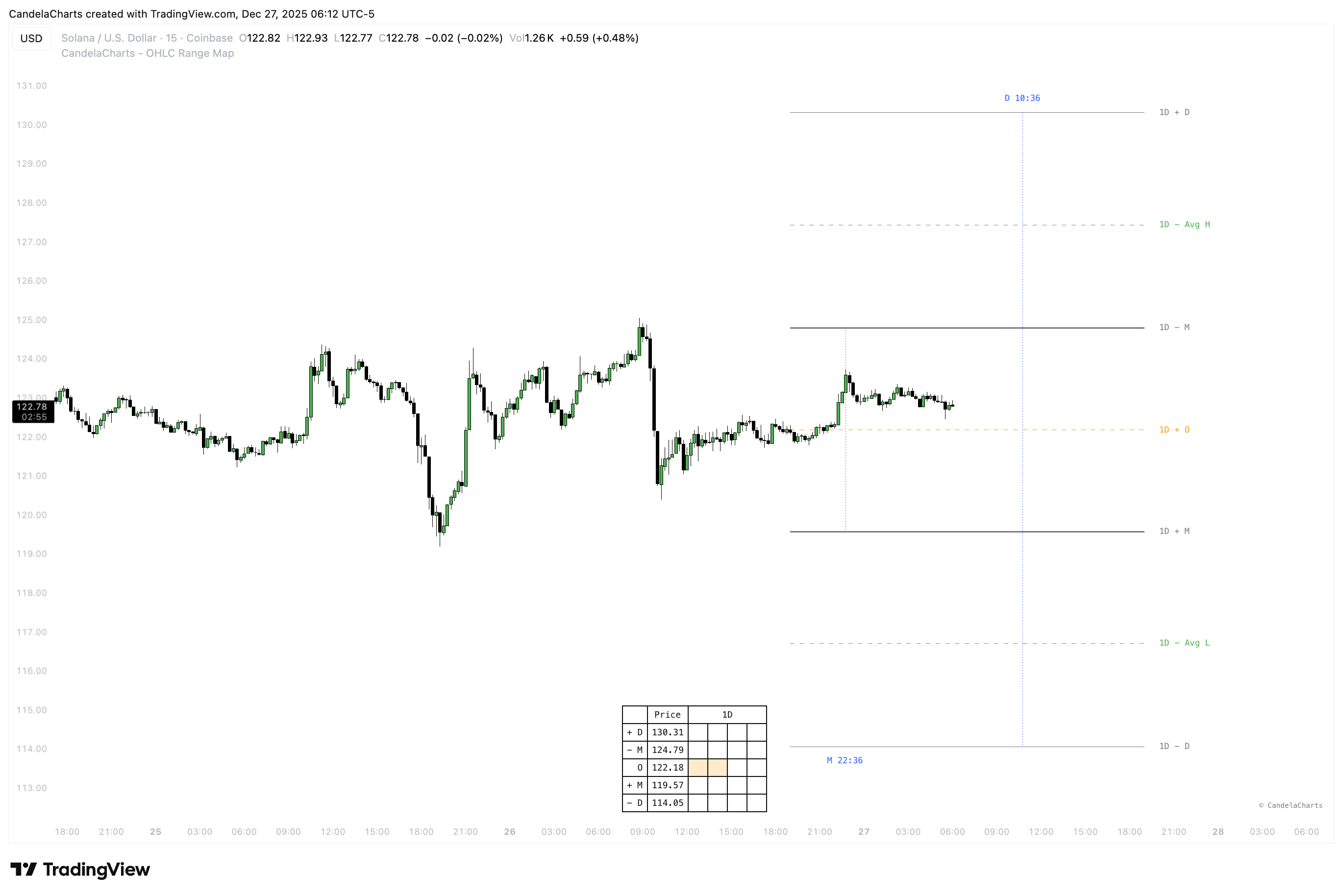
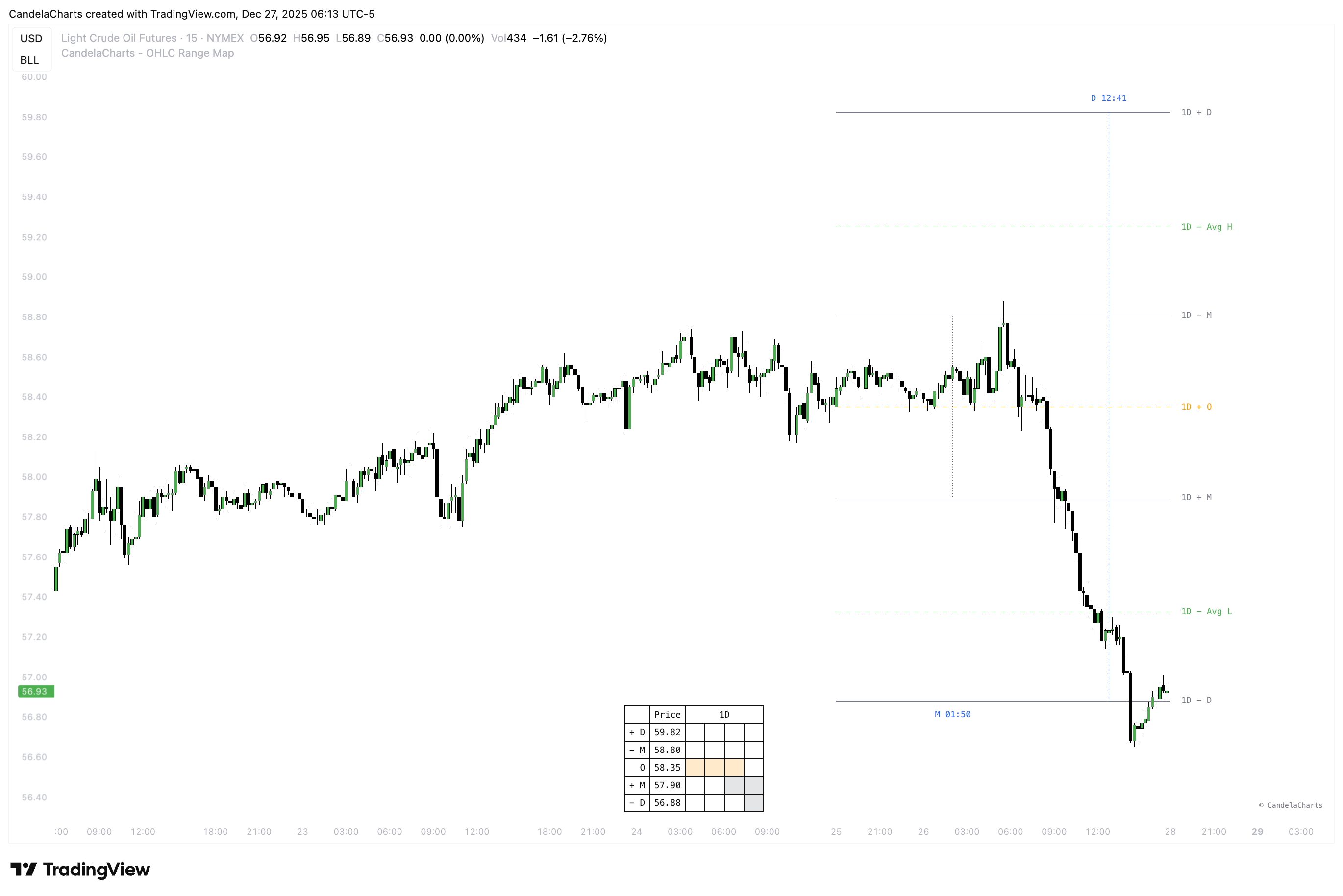
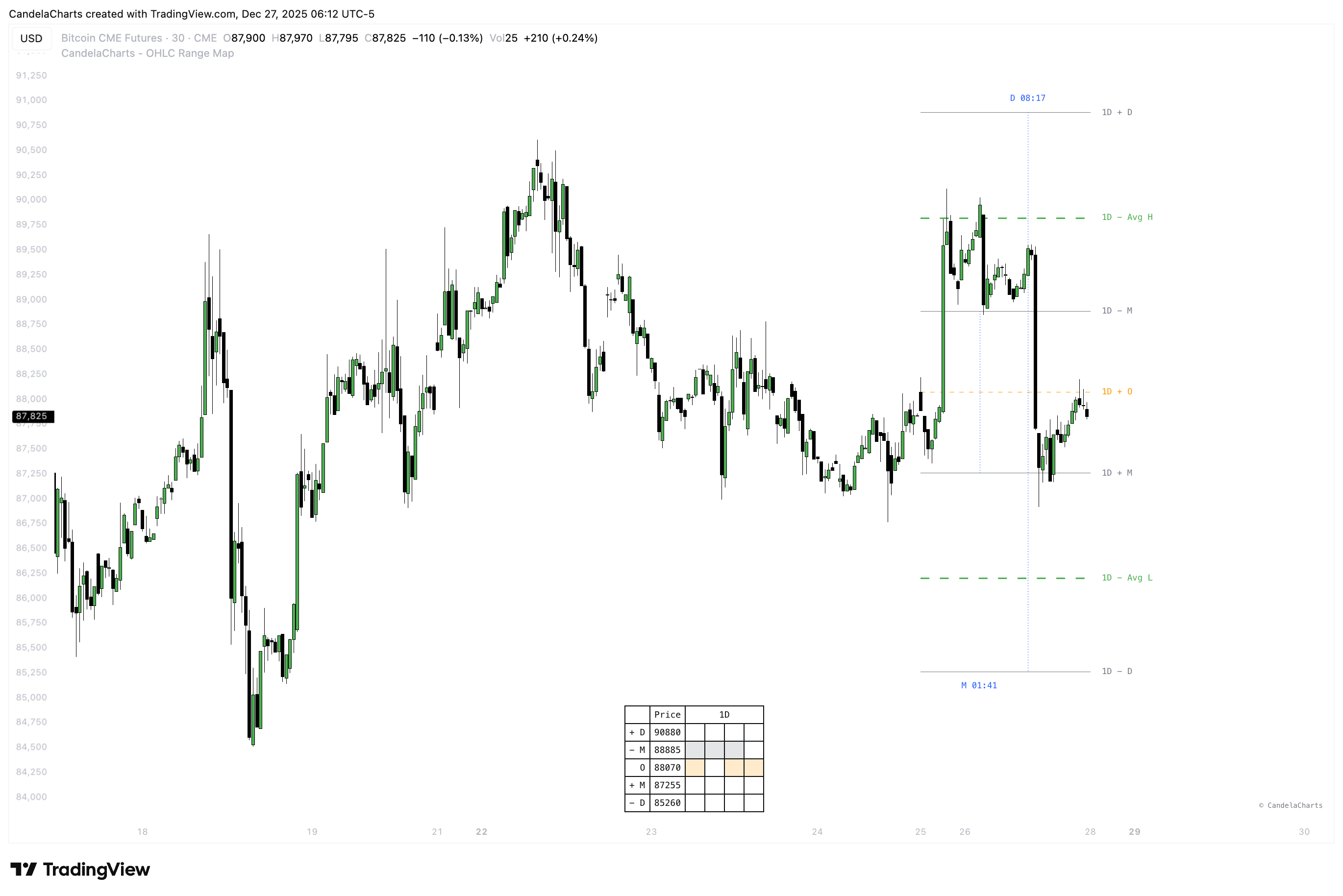
The **OHLC Range Map** is a dynamic tool that enhances candlestick analysis by mapping statistical levels based on the Open, High, Low, and Close values of each candle.
It provides a comprehensive understanding of market behavior by identifying key phases of price action, particularly **manipulation** and **distribution**.
These phases are critical for traders looking to spot potential reversals, trends, and liquidity draws in the market.
### **Statistical Manipulation Levels**
**Manipulation** occurs when price is intentionally driven in a direction that misleads traders, often through large wicks or rapid moves.
By analyzing the range between the **Open** and the **Low** for bullish candles or between the **Open** and the **High** for bearish candles, the OHLC Range Map identifies these deceptive moves.
Manipulation levels are often seen as false signals intended to entice traders into taking positions in the "wrong" direction. Recognizing these manipulation levels helps traders avoid getting caught in misleading price moves and instead anticipate possible reversals.
### **Statistical Distribution Levels**
**Distribution**, on the other hand, represents the true movement of price after manipulation, typically extending further in the direction of the market’s trend.
For bullish candles, distribution occurs when the price moves from **Open** to **High**, while for bearish candles, it extends from **Open** to **Low**. These distribution levels represent genuine price action and offer key clues for identifying liquidity targets, retracement zones, or potential reversals.
The OHLC Range Map allows traders to track these distribution phases and adjust their strategies accordingly, whether they are looking for breakout opportunities or potential reversals based on key price levels.
### **Statistical High/Low Levels**
High/Low Levels are derived by applying statistical averaging methods—most commonly the **mean (average)** or the **median**—to a selected set of previous price highs and lows over a defined lookback period. By smoothing out short-term volatility, these calculations help identify price zones that more accurately reflect where the market has historically found balance.
Once calculated, these averaged high and low values are plotted on the chart as **key horizontal levels**. Traders use them as potential **areas of support and resistance**, where price may **stall, reject, or reverse direction** due to prior market reactions and order flow concentration. Because these levels are based on aggregated historical data rather than a single price point, they often provide more reliable reaction zones than individual highs or lows.
By continuously analyzing these manipulation and distribution levels over varying time periods, the OHLC Range Map allows traders to gain deeper insights into market structure, increasing their ability to make informed, data-driven decisions.
Understanding where manipulation and distribution occur on each candlestick enhances the trader’s ability to spot opportunities and manage risk more effectively.
---
# Agent Instructions
This documentation is published with GitBook. GitBook is the documentation platform designed so that both humans and AI agents can read, navigate, and reason over technical content effectively. Learn more at gitbook.com.
## Querying This Documentation
If you need additional information that is not directly available in this page, you can query the documentation dynamically by asking a question.
Perform an HTTP GET request on the current page URL with the `ask` query parameter, and the optional `goal` query parameter:
```
GET https://docs.candelacharts.com/statistics/ohlc-range-map-tm/statistical-levels.md?ask=&goal=
```
`ask` is the immediate question: it should be specific, self-contained, and written in natural language.
`goal` is optional and describes the broader end goal you are ultimately trying to accomplish on behalf of the user. GitBook uses it to tailor the answer towards what is most useful for that goal.
The response will contain a direct answer to the question and relevant excerpts and sources from the documentation.
Use this mechanism when the answer is not explicitly present in the current page, you need clarification or additional context, or you want to retrieve related documentation sections.